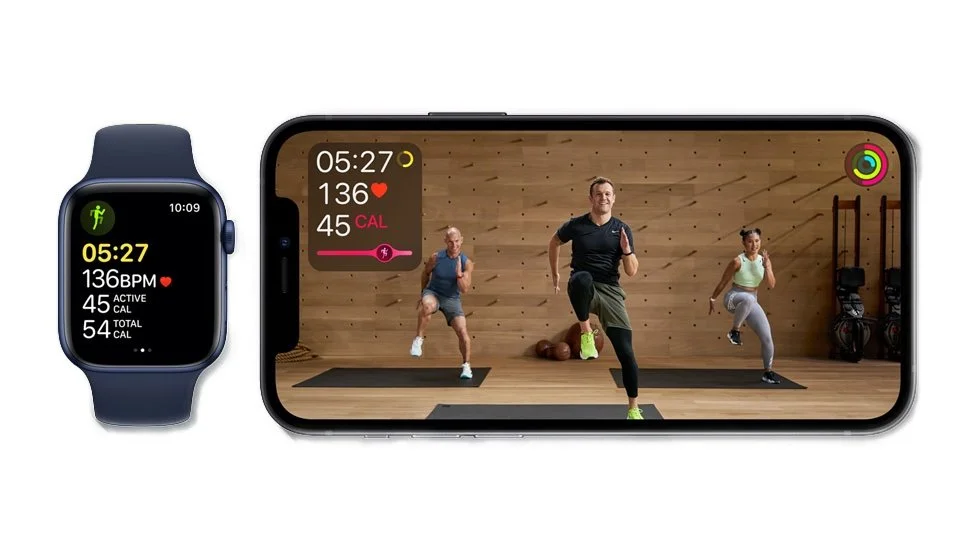
At launch, Fitness+ had no algorithmic personalization. I built the system that made it feel personalized anyway.
Most subscription services treat their catalog like a library — pick whatever you want. I built Fitness+ like a coach's plan: here's what you need now, here's what comes next.
That single design call shaped the entire launch.
The Brief
Mid-pandemic. Gyms were closed, Peloton was backordered, and global demand for at-home fitness had exploded overnight. Apple had never built a subscription fitness product. No subscriber base. No playbook. No precedent.
I joined the founding team as Content Marketing Manager — owning the in-app experience, the GTM strategy that surrounded it, and the cross-functional architecture that connected the two. The mandate was simple: build for stickiness from day one.
The launch wasn't the hard part. The framework underneath it was.
What I Built
An audience segmentation built for growth, not demographics. The Watch requirement was a constraint, but it handed us a pre-qualified audience already invested in their health. I built a segmentation around how people came to us, what they used Fitness+ for, and where they were in their subscriber lifecycle. Each segment had a totally different relationship to the product. The framework forced every team to know which one they were building for.
A content framework built like a coach's plan. Most subscription services treat their catalog like a library — pick whatever you want. I built ours like a coach's plan: here's what you need now, here's what comes next. Every piece of content was built for a specific moment in the subscriber's journey. Even without algorithms, editorial alone could make the experience feel built for you.
A messaging architecture and launch sequencing every team could ship from. Working with PMM and the brand team, I translated the strategic positioning into the messaging architecture every cross-functional team operated from — one umbrella, layered down for personas and channels. The launch was sequenced to the hardware calendar so every team could tell the same story for its surface, in the right order, at the right moment.
A measurement approach that read three signals together. Apple's privacy constraints rule out chasing a single funnel. So I built a triangulated framework — engagement signal, marketing reach, brand sentiment — read in parallel rather than chasing attribution. Each signal directional alone. Together, the story.
A trainer-as-creator strategy, on purpose. Peloton's whole model was trainer-as-celebrity. We made the opposite call. Trainers got their own voice and platform — but the product was the platform, not any one trainer. By design, no single trainer could become the face of Fitness+.
The Moment it Got Tested
A few weeks after launch, the framework hit its first real test. The instinct in the room was to lean into a hero-trainer strategy, riding social momentum to build the cultural moment. That was the category's muscle memory — the move every fitness brand had run before.
The data said something different. Behavioral signal suggested that subscribers who explored multiple trainers were building stronger habits than the ones who locked in early.
If we leaned hero, we'd win the PR cycle but train subscribers to see Fitness+ as one trainer's service. The cost wouldn't show up for months — and by then the editorial positioning would be locked in.
I pushed back. But I didn't argue the data straight. I translated it into marketing's language: "Hero trainer wins the PR cycle but costs us retention. What if the hero trainer anchors the headline, and the browse experience carries the variety?"
The cultural moment got built. The variety logic stayed in the browse architecture. The behavioral signal validated the compromise.
After that, the framework wasn't something I had to sell meeting by meeting. It became the shared language the team operated in.
The Result
Strong adoption out of the gate. Top App Store featuring. Widespread press. A credible Apple story in a category they'd never played in.
Engagement and retention compounded quarter over quarter. The frameworks I built — the segmentation, the content system, the messaging architecture, the cross-functional alignment model — became the blueprint for every feature launch and every international expansion that followed.
The same playbook is still in use today.
What This Proves
The work I'm best at happens before the playbook exists.